

Old version


We noticed that the existing configurator was rarely used by customers. Although it formally solved the task of product customization, in reality it felt complex, slow, and visually weak. It became clear that the issue couldn’t be fixed with minor tweaks, it required rethinking the entire interaction approach.
Banchmarking
To rethink the interaction approach, I analyzed not only existing solutions in the furniture industry, but also configurators from other fields. It was important to understand how different products handle selection, visualization, and guide users through the customization process.


Why not use an interactive 3D scene?
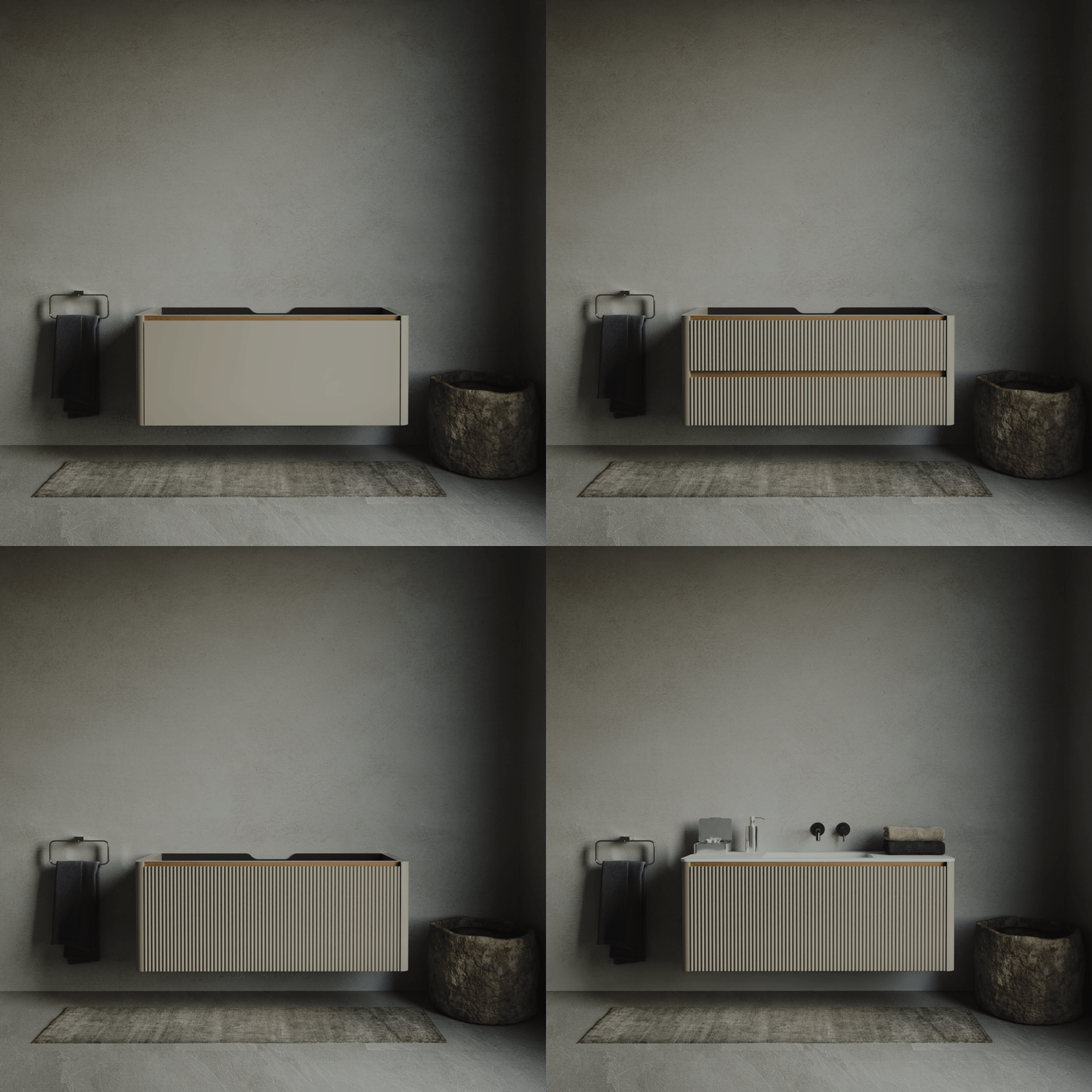
An interactive 3D scene allows flexible control over dimensions and parameters. However, in the context of furniture, it doesn’t always provide enough visual clarity. Users need not only to adjust sizes, but also to understand how materials, textures, and colors look in a realistic environment.
Component-based interface
The main idea is that the visual should be the core element of the configurator. The interface needs to be intuitive and not distract from the product itself.

All interface elements were organized into a component-based system. Each module is responsible for a specific type of setting, from base and facade selection to materials and dimensions. This approach makes the interface predictable and helps users quickly navigate through the available options.
Instant visual feedback
Parameters are adjusted directly in the interface, with changes reflected in real time. Users instantly see how their choices impact the product’s appearance.
UI
